Strong family traditions ideas share a pattern: they are easy to repeat, they cost little, and they are dropped or simplified if they cause stress. A Sunday pancake breakfast or a nightly bedtime story is enough to begin.
If your household has no traditions yet, or two sets of them are meeting, pick the tier below that fits your time and money. For the bigger picture, see how to build your family into a team, and for the most common daily ritual, the benefits of family dinners.
Traditions, rituals and routines
Family rituals are customs a family follows regularly, and Vega School describes them as giving life something to do, a purpose and a feeling of community. Family traditions are the activities, routines and behaviours repeated and passed down within a family, as Parenting Journey puts it.
The practical difference between a tradition and a routine is meaning. The Mom Co says traditions are more than routines because they show children they are part of something special. A weekly routine becomes a tradition when the family treats it as theirs and looks forward to it.
This matters when you choose. A Friday pizza night may start as a convenience, yet it can become part of your family identity once everyone expects it and talks about it. The tiers below run from nearly free to a little planning.
Free traditions you can start this week
Free traditions suit tired households, because they need no shopping and almost no preparation. They also give you the quickest test of whether a habit will stick.
- Nightly bedtime story. Parenting Journey lists sharing a nightly bedtime story among its everyday traditions. It suits families with younger children who already have a bedtime routine to build on.
- It suits families who want a daily habit that asks almost nothing of anyone.
- Memory jar. Mimeo Photos suggests placing a jar in a central location and encouraging everyone to jot down happy moments. It works well when children are old enough to write, and a parent can scribe for younger ones.
The limitation is that quiet daily habits are easy to forget. Attach them to something that already happens, such as lights-out or the end of dinner, so they have a natural cue.
Weekly traditions that need a little planning
Weekly traditions give you a regular anchor without taking over the calendar. The cost depends on what you choose, since the sources give no prices, so decide according to your own budget.
Sunday pancake breakfast
Parenting Journey names a Sunday pancake breakfast as an everyday tradition.
Shared meals and outings
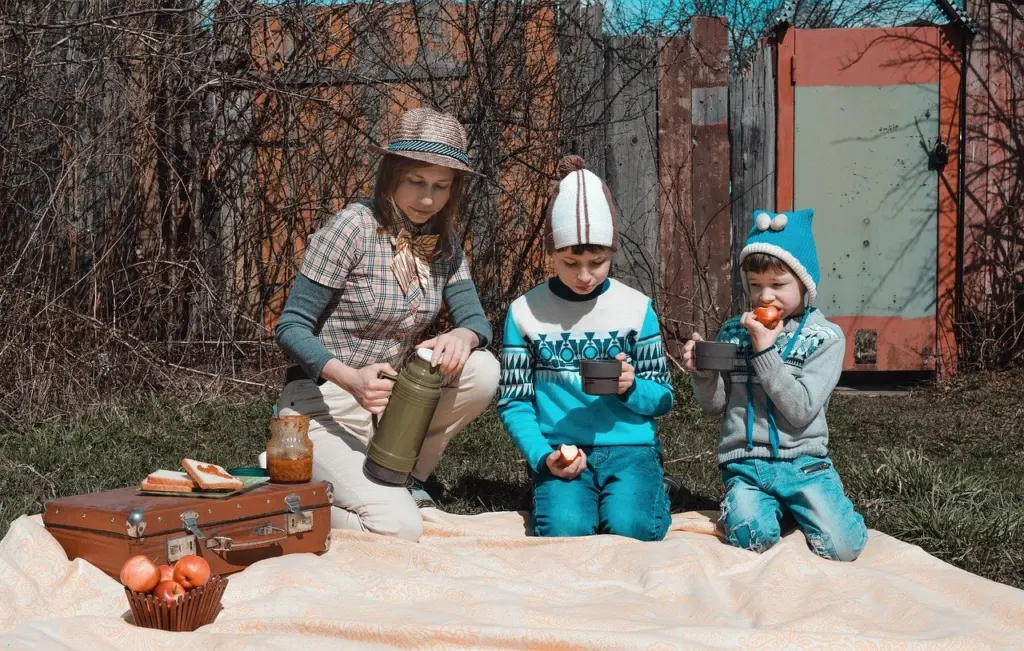
The Mom Co says a dedicated time to sit down and share a meal fosters connection and conversation. Our guide to the benefits of family dinners goes deeper on that ritual. A repeated outing with a parent can serve the same purpose when your schedule does not allow regular dinners.
Holiday and birthday traditions
Holidays and birthdays are natural anchors because the date does the reminding for you. They are also where costs can creep up, so pick one signature element rather than several.
- A signature holiday dish. Parenting Journey suggests making a special holiday dish that is unique to your family. It suits families who enjoy cooking and want something that belongs only to them.
- Winter hot chocolate and a movie. The Mom Co suggests making hot chocolate and watching a favourite holiday movie together. It suits cold evenings and families who prefer a quiet celebration.

Traditions that build identity and belonging
Some traditions matter less for the activity than for the sense of who your family is. These suit families who want children to feel they belong, and they cost almost nothing.
Mimeo Photos suggests a storytelling night in which family members take turns sharing favourite memories or tales from their childhood, and it frames this as a way to connect generations. Monthly is the rhythm it gives, which is easy to keep without crowding the week. Grandparents can join in person or by call.
A memory jar or a photo album records the results. Looking back through notes or prints shows children a pattern of shared moments, which is the core of family identity. The album matters most as a habit of recording, so choose whichever format your family will actually keep up.
How to start a new family tradition
Parenting Journey says traditions start as something a family does once and then repeats. You do not need to announce a tradition in advance. Try an idea, see whether people enjoy it, and bring it back.

- Start with your values. The Mom Co advises thinking about what matters most to the family and building a tradition around those values.
- Keep it small and flexible. Parenting Journey recommends starting on a small, flexible scale and prioritising enjoyment of connection over perfection. Mimeo Photos agrees that new traditions need not be elaborate or time-consuming.
- Repeat it. The Mom Co calls consistency the key to keeping traditions alive, so pick a rhythm you can hold, such as nightly, weekly or seasonal.
- Let it change. Revisit the tradition when children grow or the family situation shifts.
If your partner and you disagree about what to try, settle it before you involve the children. Our guide on how to communicate with your spouse when you have kids can help you find common ground.
Keeping traditions affordable and stress-free
A tradition that creates more stress is, in Parenting Journey’s words, likely one a family will not continue with. So the budget test is also an effort test: if the preparation dreads you, shrink it. Free and low-cost options such as the jars, the bedtime story and the sticky-note hunt carry the same repeating pattern as costly ones.
A good rule is to keep what makes the moment meaningful and cut what only adds work. If the dish is the point, keep the dish and drop the decorations. If the time together is the point, keep the time and simplify everything around it.
Blending different cultural backgrounds
When family members come from different cultures, the aim is to merge traditions rather than choose a winner. The Mom Co’s advice to build traditions around what matters most to the family gives you a neutral starting point: ask each partner which customs carry the values they most want children to inherit.
Vega School gives examples of cultural traditions: learning traditional crafts, taking part in ancestral rites and listening to grandparents’ stories. Each can be shared in a form that does not require everyone to share the same background. A grandparent’s stories can sit inside a storytelling night, and a craft can become a seasonal activity.
Be selective rather than trying to keep everything. Choose a few customs from each side, and add a new one the family builds together so that no background feels dominant. Parenting Journey also reminds families it is fine to evolve how they celebrate.
A quick checklist for choosing
- Decide how much time and money the family can spare this month.
- Pick from the free tier first if energy is low.
- Choose a rhythm you can repeat: nightly, weekly, monthly or on a holiday.
- Ask each family member which values or customs they want to carry forward.
- Try the idea once, then repeat it and see who looks forward to it.
Frequently asked questions
Can family traditions change as children grow?
Yes. The Mom Co says traditions can evolve over time, and Parenting Journey says it is fine to change how a family celebrates when a custom loses meaning.
How often should a tradition happen?
The examples cited here run from a nightly story to a Sunday breakfast, a monthly storytelling night and annual holidays. The right rhythm is the one you can repeat consistently.
Is it acceptable to use shortcuts?
Yes. Parenting Journey notes that buying pre-baked cookies is an easy solution that keeps a tradition alive, rather than baking from scratch.